


How to Corner on a Motorcycle: Tips for Beginners
Cornering is a controlled sequence of vision, body position, speed, braking and steering input, not a single manoeuvre. Look through the corner toward where you want to go, keep your body relaxed and neutral on the seat, brake appropriately before the corner and trail off the brakes as you lean the motorcycle into the corner. Roll on the throttle smoothly only when you have direction, and you can see your exit.
It’s often the make-or-break skill on your practical test too: get these fundamentals right, and you go from feeling like a passenger on your own bike to feeling properly in control of it.
This guide breaks down the four fundamentals every beginner needs for confident motorcycle cornering techniques, plus other riding tips and how to practise safely and progress from there.
What Cornering Actually Is
At low speed, a motorcycle turns the way most people expect: turn the handlebar left, bike goes left. However, past 40 kph, the gyroscopic effect of the spinning wheels changes things, so you have to turn the handlebar slightly right in order to get the bike to lean left, and the lean is what “turns” the motorcycle.
This is called Countersteering, and it’s why motorcycle turning tips and drills that work in a car park stop working at road speeds. Once a bike is leaned over, it naturally wants to keep turning, and beginners often fight this instinct instead of trusting it.
Every corner comes down to four fundamentals:
- Vision: Where your eyes look, the bike follows.
- Body Position: How you sit and hold the bike affects stability and control.
- Speed Control: When you brake and when you roll on the throttle shapes the whole corner.
- Countersteering: How you actually get a leaned-over bike to turn at speed.
The 4 Fundamentals of Motorcycle Cornering

1. Vision: Look Where You Want to Go
Turn your head and look through the corner toward the exit, not down at the road in front of your wheel. Your bike goes where your eyes go.
Break the corner into three points: entry, where you begin turning in; apex, the closest point you will be to the inside of the curve; and exit, where the road straightens out.
Target fixation is the trap that catches most beginners out: stare at a pothole or an oncoming car, and you’ll often steer straight toward it. Consciously redirect your eyes to where you want to end up.
You want to keep your eyes moving, scanning forward and back to points where you want the bike to be.
A useful drill: practise head turns in an empty car park, using cones or markers to set a loose curve, and focus on scanning your eyes toward the entry, apex, and exit before your bike actually gets to each point. Practice using peripheral vision to hit your immediate point/marker while you are already scanning ahead to the next point.

2. Body Position: Stay Relaxed and Neutral
For beginners, a neutral body position (lean with), relaxed grip, loose elbows, and weight balanced evenly on the seat is the safest and most effective starting point. Understanding how to lean into corners on a motorcycle starts here: lean the bike together with your body until the fundamentals feel automatic. Your body lean and bike lean angle should be the same.
Then the next step is to “lean in”, where you lean your body further into the corner than the bike, this will enable you to reduce the amount of lean angle that the bike needs to negotiate the corner.
Use your legs to grip the tank and engage your core (abs and back) muscles to keep the weight off the hands so your arms and elbows can be loose and your grip light enough to wiggle your fingers. A death-grip restricts your arm movements and causes you to fight the bike’s natural movements as you negotiate the corner.
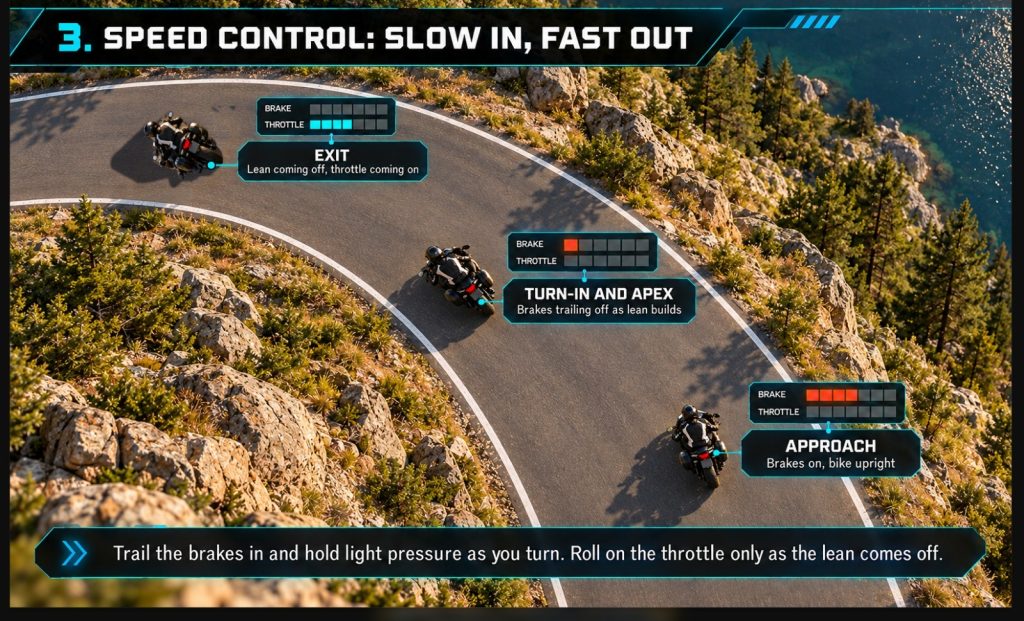
3. Speed Control: Slow In, Fast Out
Trail brake into the corner: brake a little lighter than you might expect, but hold or trail that braking for longer as you turn in, rather than releasing the brakes all at once. This settles the bike through to the tightest part of the turn.
Start rolling on the throttle smoothly only when you can see your exit clearly, and you’re able to take away lean angle. You can take away lean angle by countersteering again (push left to make the bike “pick up” in a right-hand turn) as you start to roll on the throttle. Slow in, fast out feels backwards to many beginners, but it’s safer and, over a full corner, faster than the reverse. Entering too hot and trying to slow down mid-corner is a common way beginner riders lose control on a bend.

4. Countersteering: How Bikes Actually Turn at Speed
Above 40 km/h, you turn a motorcycle by pushing the handlebar on the side you want to turn toward. Push left to go left, push right to go right. It feels counterintuitive, but you can feel it for yourself: on a quiet, straight road at a steady speed, gently press forward on the left grip, and the bike leans and turns left almost immediately.
Most riders are already countersteering without realising it, and understanding it consciously matters in an emergency evasive manoeuvre too. The steering input force should be applied horizontally (ie forward or backwards), rather than pressing into the bar with a downward force (toward the ground).

Common Cornering Mistakes Beginners Make
The most common beginner mistakes are:
- Looking Down Instead of Through: Fixing your eyes on the road right in front of your wheel narrows your view of the corner and pulls your line tighter as you go.
- Death-Gripping the Handlebars: A tense, locked grip resists the small steering inputs the bike actually needs to negotiate the corner, and it also reduces the amount of feel you have on what the front wheel is doing. When going over bumps, the stiff arms can cause undesired steering inputs, making the bike unstable.
- Adding Lean and Throttle at the Same Time: This will easily cause the tyres to lose traction and thus lose control of the motorcycle. 100 points of grip (as taught in the Yamaha Champions Riding School) must be respected and applied.
- Braking Upright, Turning Separately: Treating braking and turning as two separate actions, rather than blending them, often means arriving at the corner too fast to take it comfortably. The rider should be trailing the brakes into the corner, respecting 100 points of grip.
These are exactly the habits that structured coaching, such as the Yamaha Champions Riding School, is built to correct early, before they harden into instinct.
How to Practise Cornering Safely
Learning how to take corners on a motorcycle well takes repetition, and the safest way to practise is in a controlled environment: empty car parks for low-speed drills, and supervised circuit courses or track days for higher-speed skill-building.
- Start With Slow-Speed Basics: Figure-eights and U-turns in an empty car park build the vision and body position habits everything else depends on.
- Move to Quiet, Predictable Roads: Once the basics feel natural, practise on quiet roads with corners you already know, never on unfamiliar public roads at pace.
- Progress to Structured Environments: Circuit courses and track days build speed and confidence with proper run-off and supervision.
- Get Coached, Not Just Practised: Advanced rider training catches bad habits early, before they harden into instinct.
If you’d like your bike checked over before pushing your cornering further, BHH’s motorcycle workshop can take a look. Getting suspension, tyres, and controls properly set up makes every fundamental in this guide easier to apply.